
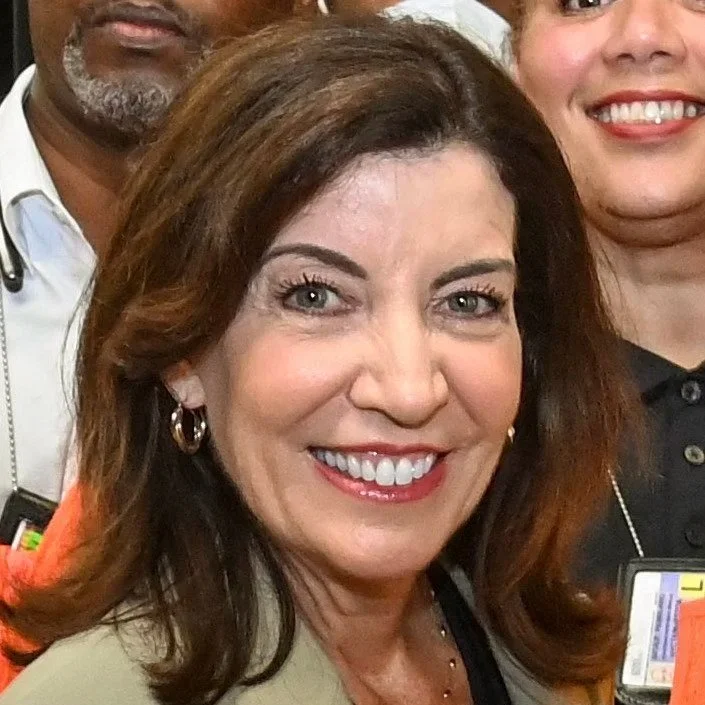
Photo Courtesy of Metropolitan Transportation Authority of the State of New York from United States of America- Wikimedia Commons
New York Governor Kathy Hochul has previously made her stance in favor of environmental protections well known. Many New Yorkers care about climate change and environmental protections, and this is one step taken by a legislator to appeal to that interest.
Climate change has been an issue that has plagued society for too long without enough change; lately, there seems to be an increase in attention on the matter.
According to the New York State website, Governor Kathy Hochul recently “signed three pieces of legislation focused on clean energy upgrades, climate education and research, and environmental protection, including one establishing an electric landscaping equipment rebate program.” Bill A.2657A was passed during a recent legislative meeting and directly impacts the commercial landscaping industry, as detailed in The Post-Journal.
The bill has allowed for a rebate program to be put in place for those who “voluntarily purchase emission-free mowers and other landscaping equipment,” as explained by The Post-Journal. When asked about the new legislature, Governor Hochul said, “I will never stop fighting to clean up the air we breathe…The rebate legislation I signed will encourage the purchase of cleaner and quieter battery-powered lawn mowers and other landscaping equipment that will benefit us all.”
With the new law, “the New York State Energy Resource and Development Authority [will] offer financial incentives” when commercial landscapers purchase new equipment that better supports the environment, such as equipment that is emissions-free or battery-powered, as reported by News 10. The amount that the New York State Energy Resource and Development Authority will be offered to use for the program has yet to be determined.
Bill A.9590A was also passed during this legislative session and will focus on providing opportunities for research needed to counter climate change. The New York State website explains that the bill “authorizes the Dormitory Authority of the State of New York to provide financing to the New York Climate Exchange, a non-profit consortium led by the State University of New York at Stony Brook, for the construction of facilities on Governors Island that will promote climate education and research.”
The New York Climate Exchange is developing Governors Island to serve as a center dedicated solely to climate research and education. The New York Climate Exchange’s website details the environmentally sustainable construction of the campus,, which includes the use of geothermal wells, a living shoreline to reduce erosion, and carbon negative concrete. The island, according to the Governors Island website, also provides companies with an area to test projects on a real-life scale, which gives companies a chance to see how their products will impact the earth prior to releasing them.
The last piece of legislation, S.1986, “gives school districts more time to pay off clean energy upgrades using money they save on their utility bills by increasing the time period for recovery to up to 25 years, up from the current 18,” as stated by the New York State website. Currently, school districts are in the process of remodeling their facilities to be more energy-friendly, which is very expensive. Prior to S.1986, school districts were required to pay back the amount spent on energy-saving initiatives within 18 years, but with the passing of this new bill, districts will be able to take up to 25 years, as explained by Bill Track.
By extending the time frame, energy-saving measures become more marketable and attractive to school districts thinking of investing in them, as reported by Bill Track. Additionally, districts that may have been hesitant in purchasing energy-saving advancements before this bill was passed may consider investing now.